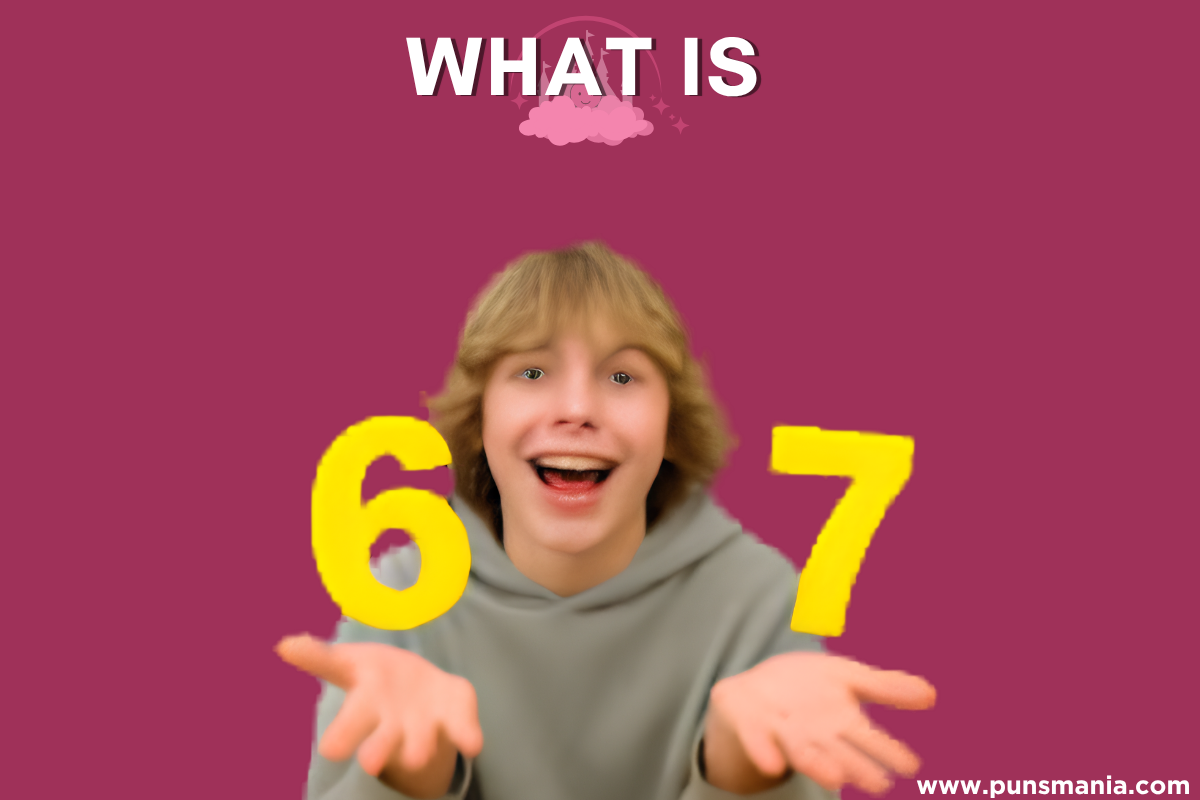
If you’ve been around a kid, a classroom, a TikTok comment section, or basically any group chat in 2026, you’ve probably heard someone shout “six seven” out of nowhere, usually paired with a hand gesture that looks like they’re weighing two invisible objects. No context. No explanation. Just “6 7,” followed by chaos.
You’re not losing your mind, and you didn’t miss a math lesson. “6 7” is officially one of the most-searched slang terms of the year, racking up over 1.6 million searches as people everywhere try to figure out what it actually means — and the honest answer might surprise you.
Other Popular slang: |Rizz Meaning| |Larper Meaning|
Here’s the full breakdown.
What Does “6 7” Actually Mean?
Here’s the twist: “6 7” doesn’t really mean anything.
It’s what’s known as a “nonsense phrase”, slang that caught on for its sound, rhythm, and meme-ability rather than any real definition. It’s typically said with a see-saw hand motion, as if the speaker is physically weighing two options back and forth, which mirrors the “6” and “7” bouncing between two sides.
Think of it as the 2026 version of “skibidi”, a phrase that spread because it’s fun to say and instantly recognizable, not because it translates to an actual concept.
Where Did “6 7” Come From?
The phrase blew up through short-form video platforms, spreading largely among Gen Alpha (today’s kids and pre-teens) before crossing over into wider internet culture. Like a lot of viral slang, its exact origin is murky — there’s no single creator or clear original clip that everyone agrees started it. It simply caught on because it was catchy, easy to repeat, and paired well with a physical gesture that made it instantly shareable on video.
Once it spread in classrooms and among younger kids, it jumped onto social feeds, then into search trends, as parents, teachers, and older siblings scrambled to figure out what they were hearing on repeat.
How Is “6 7” Used?
Because it doesn’t have a fixed meaning, “6 7” gets dropped into conversation almost anywhere:
- As a random interjection, shouted for no particular reason
- In response to any question involving choices — often paired with the hand-weighing gesture
- As a joke or callback between friends who already know the trend
- Simply as a way to be loud, funny, or annoying (often on purpose)
If someone says it to you, the “correct” response is usually just to laugh, ignore it, or say it back.
Why Is “6 7” So Popular?
A few things made this phrase spread as fast as it did:
- It’s nonsense, and nonsense is fun. Phrases with no real meaning are easy to adopt because there’s no “wrong” way to use them.
- It has a built-in gesture. The hand motion makes it visual and easy to imitate, which is ideal for video content.
- It’s short and rhythmic. Two syllables, easy to shout, easy to remember.
- Adults don’t get it. Like most kid-driven slang, part of the appeal is that it confuses parents and teachers — which only makes kids use it more.
Is “6 7” Here to Stay?
Slang like this usually has a short shelf life, but “6 7” has already outlasted a lot of trends that came before it, holding on for over a year in some form. Whether it fades out completely or gets replaced by the next viral nonsense phrase, one thing is certain: it’s earned its place as one of the defining slang terms of 2026.
FAQs
Does “6 7” have a real meaning?
No. It’s considered a nonsense phrase — it caught on for how it sounds and looks (with the hand gesture) rather than any actual definition.
Who uses “6 7”?
It’s most popular with Gen Alpha (kids and pre-teens), though it has spread to teens and adults through social media and general internet culture.
What’s the hand gesture that goes with “6 7”?
It’s a see-saw or weighing motion with both hands, alternating up and down, as if balancing two invisible options.
Is “6 7” the same as “skibidi”?
They’re similar in spirit — both are viral nonsense phrases popular with younger internet users — but they aren’t interchangeable and come from different trends.
Conclusion
“6 7” is proof that slang doesn’t need a dictionary definition to take over the internet. It’s silly, it’s viral, and it’s exactly the kind of phrase that spreads because everyone wants to be in on the joke. So the next time someone yells “six seven” at you out of nowhere, you’ll know exactly what’s going on — which is, well, nothing at all.